
Recent Trends in Sustainability 2025
We all aim for economic growth and development in India. However, most of us do not realize the negative impact it can have on the country if we don’t do it carefully with systematic policies or schemes. All the steps taken should consider the effective allocation of resources since the resource are scarce, but the wants are unlimited.
So, how do we raise our economic position while keeping the environment safe? Certain steps need to be taken to increase the technological advancements, quality of education, infrastructure, etc. Yes, you guessed it right; it is sustainability. Let’s look at the various trends that are followed to apply this in the economies:
Sustainable Trade
Trade is the exchange of goods and services from one person or entity to another which is the most important driver in globalization and the interaction with other countries. But we don’t realize how the act that is so important for the economy is also affecting the same negatively. So how does sustainable trading exactly work?
Sustainable trading is all about tending to future goals, so it combines the profitable market principles with ESG (Environmental, Social and Governance). The supply chains need to ensure that the raw materials are from ethical sources and ecological footprint are minimized.
The United Kingdom are in the leading position with a perfect environmental score of 100 being the most Sustainable Trading Nation. They gave importance to robust carbon neutrality target, fair trade practices and progressive green finance mechanism (Mishra, 2025).
Renewable Energy
It is the transition of prioritizing fossil fuels to solar, wind and green hydrogen technologies for the surge in renewable energy investments. This step would create a significant economic opportunity while being mindful of the environment which leaves room for innovation and job creation.
New Zealand was at the top for three consecutive years as the most sustainable economy and now it’s on second rank after the UK. Its environmental score is still strong at 98.95 focusing on renewable resource management and conservation (Indian Express, 2025).
Circular Economy
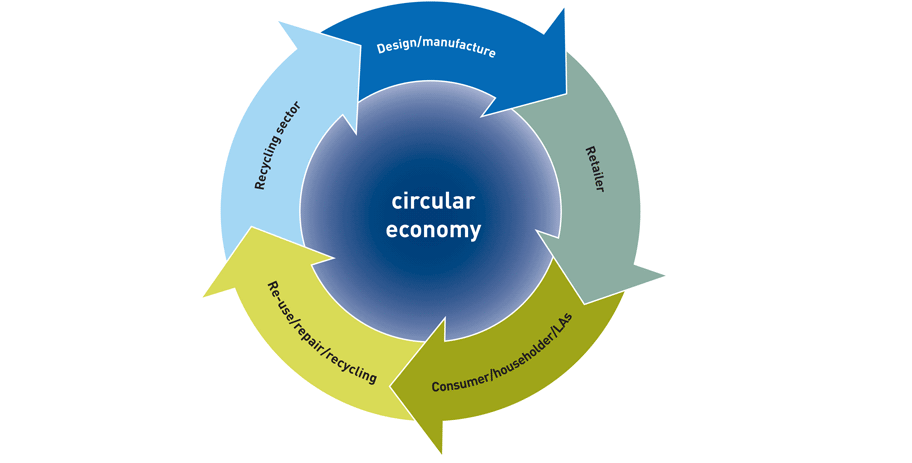
Innovations have the potential to redefine industries like fashion, electronics and construction by giving importance to product Recyclability, durability and reusability. The goal is to reduce dependency on raw materials by creating new revenue streams through waste recovery.
Countries like France, Germany and the Netherlands focused on this phenomenon which was adopted since June 2014. Countries of Europe are prioritizing in creating a strong market for organic fertilizers and then branching out to petrochemical ones.
Why is it that they adopted circular economy function in 2014 but took so long to implement it to a good extent? Europe started to realize that they are a relatively poor continent geologically and do not have enough resources to waste them. This gave them the kickstart to present roadmaps for it (Isles, 2021).
Governments and Regulatory bodies
Strengthened regulations will push the organizations to report and improve their sustainability measures. This is necessary for the businesses to comply to the legal necessities and attract the investors to build a stronger stakeholder trust with transparency.
Mexico is leading in Latin American sustainability legislation that would modify the domestic and international companies due to the new standards. The framework is developing with time showing priority to environmental accountability. This addition is connecting economies with sustainability obligations.
You would be amazed by how big of an impact this created even for the Indian economy. The course of action that Mexico took acted as a trigger for India to shift to sustainability governance. It gave a push to India for the implementation of ESG, adhering to policies and shape domestic firms to a global interaction using sustainable environments (Loughlin, 2025).
Artificial Intelligence
AI and big data are a crucial part of technological advancements in the process of putting sustainability efforts. Technology can be used for us instead of against us by using tools that empower industries in minimizing waste by making data-driven decisions.
Singapore worked on a green plan 2030 which focuses on 5 pillars to navigate through climate change with the increase in digitization. The economy involves AI and IoT for managing air quality, waste management and consumption. The five pillars involve city in nature, energy reset, green economy, sustainable living and resilient future (TechNews, 2025).
Conclusion
Sustainable measures are being taken by the economies knowing that the resources are limited and the environment needs to be taken into consideration while making decisions. Countries are adopting different approaches such as sustainable trade, which integrates ESG principles. This helped in ethical sourcing and reduced carbon footprints. Renewable energy emphasized the shift to solar, wind, and green hydrogen for cleaner development. The trends are aiming to boost economic growth and development without sacrificing sustainability. Together, these steps reflect a unified global movement toward environmentally responsible and technologically advanced countries.